
Our theory of change
Prepared fathers, strengthen families
How the Prepared Dad Foundation works to help first-time fathers show up calm, confident and capable through pregnancy, birth and early parenting, and why that matters for mums, babies and communities.
In one sentence
If expectant fathers are prepared, supported and included during pregnancy, then they are better able to support their partners, bond with their babies and look after their own wellbeing.
The problem we exist to solve
Dads are at almost every birth. Hardly any are prepared for it.
Expectant fathers are present at most births and are expected to play their part in caring for their newborn. Yet peer education, maternity services and postnatal support, up until now, have been built entirely around mothers - which is perfectly understandable and endorsed by Prepared Dad. However, this means many expectant first time fathers attend the birth unsure of their role, and then face a steep learning curve at home with a newborn with little support of their own.
This is a missed opportunity. Fathers who could be a steady source of support are left feeling helpless, isolated or overwhelmed at a time when they most want to help.
~95%
of births are attended by the baby's father, who is given little or no formal preparation for this support role.
Rominov et al. 2015; Healthy Male 2020
1 in 4
fathers rated their physical or mental health as only poor or fair in the first year of fatherhood — two to three times the rate of age-matched men in the general population.
Movember Institute, More Than a Provider, 2026 (n=1,216)
59%
of fathers said no health professional asked about their mental health or coping at any point during pregnancy or the first 12 months after birth.
Movember Institute, More Than a Provider, 2026 (n=1,216)
78%
of fathers said fatherhood had highlighted the importance of looking after their mental health — yet most were never asked how they were coping.
Movember Institute, More Than a Provider, 2026 (n=1,216)
6×
more likely to report poor physical health if under financial strain (5× for mental health) — the fathers who most needed support were the least likely to receive it.
Movember Institute, More Than a Provider, 2026 (n=1,216)
Who we work with
For every father we support, we are also supporting a mother and a baby.
First-time expectant fathers
Men preparing for the birth of their first child, from all backgrounds globally.
Mothers and babies
The people whose wellbeing improves when a father is informed, involved and steady.
Maternity professionals and services
Midwives, hospitals and health services who want practical ways to bring dads into the perinatal care team.
Our pathway to change
From preparation to lasting impact
What we put in, what we do, and the changes we expect to see for fathers, families and the wider community over time.
What we bring
- Lived experience of perinatal fatherhood
- A clinical midwife, psychotherapist and couples counsellor, and experienced dads as facilitators
- A distinguished board with obstetrics, midwifery, fatherhood research, policy and parenting support expertise
- Research partners at Curtin University, Western Sydney University, the University of Queensland and Tresillian
- Partner maternity hospitals and services in NSW, WA, TAS, ACT and QLD
- Funders, philanthropy and pro bono supporters
What we do
- Prepared Dad Program: Live online sessions
- Ongoing peer support: monthly check-ins and a private online community
- Free guides, videos and resources, including translated materials
- Research and advocate for bringing dads into the perinatal care team
What we deliver
- Nearly 500 fathers registered for the program in 2025–26
- Peer and expert-led education, with session recordings
- Resources in six languages and a video series for culturally and linguistically diverse dads
- A monthly bereavement support circle for dads in Australia and the UK
Change for dads
- Greater knowledge of pregnancy, labour, birth and newborn care
- Confidence in their birth-support role and less fear of the unknown
- More conversations and planning with their partner
- Awareness of their own mental health and where to find help
- Connection with other dads, and less isolation
Change in the family
- Calm, informed and active support during labour and birth
- Shared caregiving and stronger parenting teamwork
- Early bonding between father and baby
- Dads who recognise when they are struggling and seek support early
- Couples who handle the stress of new parenthood with respect
Healthier, safer families
- Mothers feel supported, with less distress after birth
- Babies grow up in a secure, stable early environment
- Relationships that are safe, respectful and equal
- Health services that routinely include fathers
- A culture where involved fatherhood is the norm from conception onward
How the change happens
Why preparing dads makes a difference
Each step in our pathway builds on the one before. Below is the reasoning that links what we do to the change we want to see, and the evidence behind it.
- 1
Reach dads at the right moment
Pregnancy is a window of motivation
First-time fathers are more motivated than ever to be present and look after their health for their families. Engaging them before the birth, when they are actively looking for guidance, gives them time to learn and prepare.
Evidence 1
- 2
Build knowledge and confidence
Knowing what to expect replaces fear with purpose
Fathers who understand what happens in labour, birth and the first weeks at home can act as a calm, informed support person and advocate, instead of feeling helpless on the sidelines.
Evidence 1
- 3
Strengthen the parenting team
Supported partners do better
Research links high-quality partner support during pregnancy with less maternal stress and emotional distress after birth, and with fewer difficulties in early parent–infant bonding. Involving male partners in antenatal care is also associated with greater use of maternal health services.
Evidence 2,3,4
- 4
Look after dads too
A father's wellbeing shapes the whole family
A father's mental and physical health is closely connected to relationship quality, partner wellbeing and children's development. In the Movember survey of 1,216 Australian fathers, 1 in 4 rated their health as poor or fair in the first year, 1 in 5 felt more isolated since becoming a dad, and 78% said fatherhood made looking after their own mental health more important — yet 59% were never asked how they were coping. Peer connection and clear pathways to help mean fathers are less likely to struggle alone.
Evidence 1
- 5
Shift the system and the culture
From "extra" to expected
By working with maternity services, researchers and policymakers, we aim to make bringing dads into the perinatal care team a standard part of perinatal care, so the next generation of fathers is prepared as a matter of course.
Evidence 2,3,4
What we're seeing so far
Early results from the Prepared Dad Program
Every participant is invited to complete a post-program evaluation. These results are from 67 fathers who completed it.
97%
would recommend the program to other expectant fathers
81%
rated the program "excellent" overall, and the rest rated it "good"
Independent evaluation underway
A mixed-methods study led by Curtin University, with Western Sydney University, the University of Queensland and Tresillian, is measuring fathers' knowledge, confidence and attitudes before the program, straight after it, and one month later. The study has human research ethics approval.
The results above are self-reported and collected straight after the program. The Curtin study will give a fuller, independent picture of what changes and whether it lasts.
From our graduates
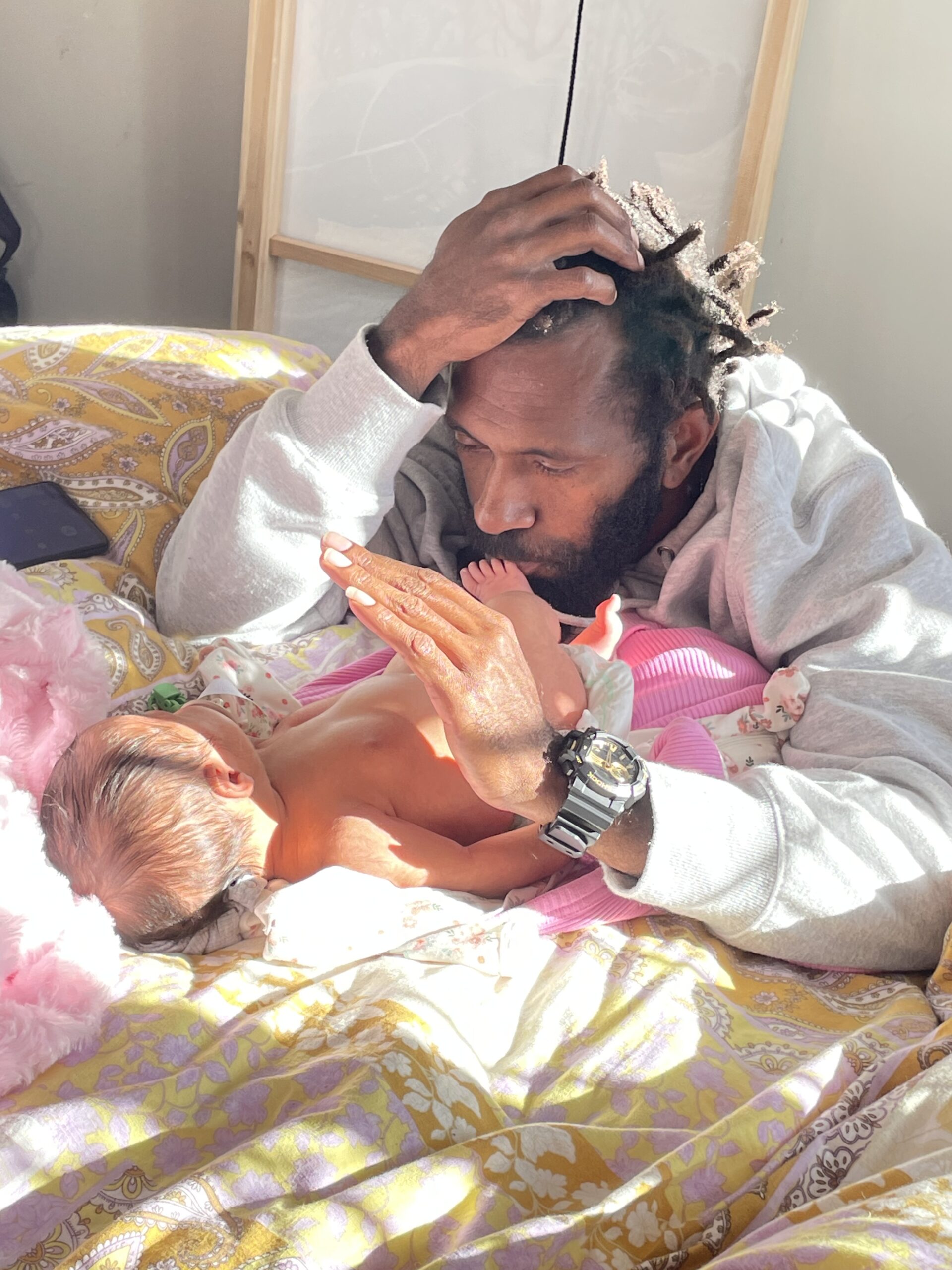
“My wife has said that she attributes how well she managed to go through the birth, despite a somewhat difficult and painful one, to how prepared and calm I was.”
How we measure progress
Holding ourselves to account
Our assumptions
What needs to hold true
Dads want to be involved.
Most expectant fathers want to play an active role, and lack preparation rather than willingness.
Access has to be easy.
Free, live online sessions with recordings remove many of the barriers of cost, distance and work.
Confidence leads to action.
Fathers who feel informed and capable are more likely to support their partners and share care in practice.
Supporting dads helps mums.
Bringing dads into the perinatal care team adds to women-centred care and never takes away from it.
Services will partner.
Maternity services will refer fathers when they have a trusted, evidence-informed program to point them to.
How we work
Our principles
Lived experience and clinical expertise, together.
Sessions are led by experienced dads alongside a clinical midwife and relationship professionals.
Strengths-based and judgement-free.
We meet men where they are and build on their motivation to be good fathers and partners.
Respect and safety first.
We promote calm, respectful and equal relationships, and teach dads to recognise and manage stress and anger.
Inclusive by design.
Resources in multiple languages and content for culturally and linguistically diverse families.
Evidence-led.
We evaluate what we do, share what we learn, and refine the program as the evidence grows.
Be part of the change
Help every new dad start prepared
Whether you are an expectant father, a maternity professional, an employer or a funder, there is a place for you in this work.
Get in touch: ryan@preparedad.org.au
References
- 1Wilson, Fitzpatrick, Rice & Seidler (2026). More Than a Provider: Australian fathers on health, identity and experiences of parenthood. Movember Institute of Men's Health. Nationally survey of 1,216 Australian fathers with at least one child aged 0–10 years.
- 2Wierenga, Skalkidou & Schober (2025). Pregnancy planning and partner support: protective factors for women's perinatal wellbeing in Sweden.
- 3Martin & Brock (2023). The importance of high-quality partner support for reducing stress during pregnancy and postpartum bonding impairments.
- 4Suandi, Williams & Bhattacharya (2019). Does involving male partners in antenatal care improve healthcare utilisation? Systematic review and meta-analysis.
Program results: Prepared Dad Program post-program evaluation (n=67). Registration figures: July 2025 – May 2026. The Prepared Dad Foundation is the public name of PREPARE Foundation Ltd, a registered charity with the ACNC.